Ibanez wrote:kalm wrote:
You fly fish?
If so, which of your posts had the best?
Which one was surprisingly good?
I’ve heard there’s some great small stream fishing in NC?
I nerd out over both fly fishing and geography.

I’m about to head to the NC mountains for a week and do some fishing. My in laws have a cabin with a waterfall and stream in the front with plenty of fish. It’s pretty dang sweet.
I’m trying fly fishing for the first time- any tips?
Sent from my iPhone using Tapatalk
Will there be any fly fishermen there to help you? Are you borrowing gear? If not, spend the dough on a guide for at least a half day to teach you how to cast and line management. Or see if anyone in the area offers casting instruction.
Otherwise...
With fly fishing, you're casting the fly line, not the lure. You get the line all the way behind you first before the forward motion. This requires patience, tempo, and a shorter back and forth motion than you think. The most common mistake for newbs is being too fast with their casting motion and allowing the rod (always call it a rod, no self respecting angler calls it a pole) to go too far back. The old "four count rhythm between 10:00 and 2:00 from A River Runs Through It is actually quite accurate.
As implied above, always check the area behind you before you chuck so that you have enough room for your back cast. Be prepared to get the fly and line caught up in streamside vegetation...a lot. It's part of the game.
Flies: There's a little bit of difference between EC(b) and WC(b) hatches but common dry fly patterns like a Parachute Adams and Elk Hair Caddis (sizes 10-16 for small streams) should do fine anywhere and there's a reason they're popular.
Since 90% of what a trout eats is below the surface, nymphs and streamers (wet flies) tend to be the best options and you don't have to worry about presentation and how it floats on the surface. Two of the best nymphs are the Pheasant Tail, and Hare's Ear. Depending on size, they can mimic several different species of bugs. Streamers give an impression of a juvenile crawdad or minnow, or are buggy and colorful enough to piss a fish off and elicit a strike.
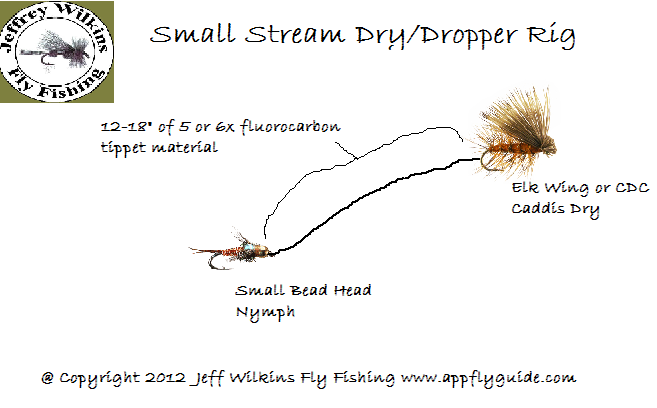
Once you get decent at casting,a dry fly and dropper rig is the ticket much of the time. Fish will hit the dry but it also acts as a strike indicator for when a fish takes the nymph.
You want to cast upstream as much as possible. Trout tend to face the direction the current is coming from as that's their food conveyor belt. If you are upstream of the fish they are looking in your direction and will either spook or not bite. Look for pools, depth, undercut banks, and eddies (keep in mind with eddies that if the water is big enough trout can face any direction as the water swirls). Trout like cool water, oxygenated water, cover from predation above, and food. Look for fishy places that offer these things.
Quartering your cast upstream is fine but if you can find a good pool or deep run where you can cast from directly below a fishy looking spot you can get quite close to the fish, cast just above them and let the fly naturally float into their zone of vision.
There is so much more to it (matching a specific hatch vs. impressionistic patterns, mending a floating line, gear etc) but baby steps and patience are important.
If there are any nearby ponds with bass and other spiny rays, that's a great place to practice your casting before you tackle the stream. Small bass poppers are wind resistant and stay in the air a little bit longer plus there's less emphasis on a "quiet presentation". Splash a popper down near a bass and you'll typically get a strike.


