This upsets me. Education shouldn't be about promoting anything...not patriotism nor the free enterprise system nor God (nor atheism nor socialism nor environmentalism nor etc). Like proper journalism, it should simply present facts without any biased opinion and let the receiver of the knowledge do what they want with it. And it certainly shouldn't be influenced by politics in ANY way."We are fighting for our children's education and our nation's future," Dunbar said. "In Texas we have certain statutory obligations to promote patriotism and to promote the free enterprise system. There seems to have been a move away from a patriotic ideology. There seems to be a denial that this was a nation founded under God. We had to go back and make some corrections."
Texas OKs school textbook changes
Re: Texas OKs school textbook changes
-
kalm
- Supporter

- Posts: 69581
- Joined: Thu Oct 01, 2009 3:36 pm
- I am a fan of: Eastern
- A.K.A.: Humus The Proud
- Location: Northern Palouse
Re: Texas OKs school textbook changes
Baldy wrote:There is no such thing as a democratic constitutional republic. Sorry.kalm wrote:
We are a democratic constitutional republic. "We the people"...
And while the founders tended to be religious, as we all know, many of the more important ones were deists. I'm not sure evanelical Texans are going to fairly represent that notion.
The only founding father who could even be considered a Deist in any way would be Jefferson. The funny part is that many of his writings and thoughts of the time very closely mirror the philosophy of Ayn Rand in the middle of the 20th century. The only considerable difference is that Rand was an dyed in the wool Atheist.
I still would like to know who the "many" are. Washington? No. Adams? Definitely not. Franklin? Not even close. Madison? No way. Sam Adams? Absolutely not.
Main Entry: de·moc·ra·cy
Pronunciation: \di-ˈmä-krə-sē\
Function: noun
Inflected Form(s): plural de·moc·ra·cies
Etymology: Middle French democratie, from Late Latin democratia, from Greek dēmokratia, from dēmos + -kratia -cracy
Date: 1576
1 a : government by the people; especially : rule of the majority b : a government in which the supreme power is vested in the people and exercised by them directly or indirectly through a system of representation usually involving periodically held free elections
2 : a political unit that has a democratic government
3 capitalized : the principles and policies of the Democratic party in the United States <from emancipation Republicanism to New Deal Democracy — C. M. Roberts>
4 : the common people especially when constituting the source of political authority
5 : the absence of hereditary or arbitrary class distinctions or privileges
dem·o·crat·ic /ˌdɛməˈkrætɪk/ Show Spelled[dem-uh-krat-ik] Show IPA
–adjective
1.pertaining to or of the nature of democracy or a democracy.
2.pertaining to or characterized by the principle of political or social equality for all: democratic treatment.
3.advocating or upholding democracy.
4.(initial capital letter) Politics.
a.of, pertaining to, or characteristic of the Democratic party.
b.of, pertaining to, or belonging to the Democratic-Republican party.
You may not like it, but you live in a democratic constitutional republic. Sorry.

http://en.wikipedia.org/wiki/Deism#Deis ... ted_States" onclick="window.open(this.href);return false;Deism in the United States
Enlightenment philosophy (which itself was heavily inspired by deist ideals) played a major role in creating the principle of separation of church and state, expressed in Thomas Jefferson's letters, and the principle of religious freedom expressed in the First Amendment to the United States Constitution. American Founding Fathers, or Framers of the Constitution, who were especially noted for being influenced by such philosophy include Thomas Jefferson, Benjamin Franklin, Cornelius Harnett, Gouverneur Morris, and Hugh Williamson. Their political speeches show distinct deistic influence. Other notable Founding Fathers may have been more directly deist. These include James Madison, John Adams, possibly Alexander Hamilton, Ethan Allen [35] and Thomas Paine (who published The Age of Reason, a treatise that helped to popularize deism throughout America and Europe). Elihu Palmer (1764–1806) wrote the "Bible" of American deism in his Principles of Nature (1801) and attempted to organize deism by forming the "Deistical Society of New York."
In the United States there is controversy over whether the Founding Fathers were Christians, deists, or something in between.[36] [37] Particularly heated is the debate over the beliefs of Benjamin Franklin, Thomas Jefferson, and George Washington.[38] [39][40]
Benjamin Franklin wrote in his autobiography, "Some books against Deism fell into my hands; they were said to be the substance of sermons preached at Boyle's lectures. It happened that they wrought an effect on me quite contrary to what was intended by them; for the arguments of the Deists, which were quoted to be refuted, appeared to me much stronger than the refutations; in short, I soon became a thorough Deist. My arguments perverted some others, particularly Collins and Ralph; but each of them having afterwards wrong'd me greatly without the least compunction, and recollecting Keith's conduct towards me (who was another freethinker) and my own towards Vernon and Miss Read, which at times gave me great trouble, I began to suspect that this doctrine, tho' it might be true, was not very useful."[41] [42]
For his part, Thomas Jefferson is perhaps one of the Founding Fathers with the most outspoken of Deist tendencies, though he more often referred to himself as a Unitarian. In particular, his treatment of the Biblical gospels which he titled The Life and Morals of Jesus of Nazareth, but which subsequently became more commonly known as the Jefferson Bible, exhibits a strong deist tendency of stripping away all supernatural and dogmatic references from the Christ story




Re: Texas OKs school textbook changes
kalm wrote: Main Entry: de·moc·ra·cy
Pronunciation: \di-ˈmä-krə-sē\
Function: noun
Inflected Form(s): plural de·moc·ra·cies
Etymology: Middle French democratie, from Late Latin democratia, from Greek dēmokratia, from dēmos + -kratia -cracy
Date: 1576
1 a : government by the people; especially : rule of the majority b : a government in which the supreme power is vested in the people and exercised by them directly or indirectly through a system of representation usually involving periodically held free elections
2 : a political unit that has a democratic government
3 capitalized : the principles and policies of the Democratic party in the United States <from emancipation Republicanism to New Deal Democracy — C. M. Roberts>
4 : the common people especially when constituting the source of political authority
5 : the absence of hereditary or arbitrary class distinctions or privileges
dem·o·crat·ic /ˌdɛməˈkrætɪk/ Show Spelled[dem-uh-krat-ik] Show IPA
–adjective
1.pertaining to or of the nature of democracy or a democracy.
2.pertaining to or characterized by the principle of political or social equality for all: democratic treatment.
3.advocating or upholding democracy.
4.(initial capital letter) Politics.
a.of, pertaining to, or characteristic of the Democratic party.
b.of, pertaining to, or belonging to the Democratic-Republican party.
You may not like it, but you live in a democratic constitutional republic. Sorry.
http://en.wikipedia.org/wiki/Deism#Deis ... ted_States" onclick="window.open(this.href);return false;Deism in the United States
Enlightenment philosophy (which itself was heavily inspired by deist ideals) played a major role in creating the principle of separation of church and state, expressed in Thomas Jefferson's letters, and the principle of religious freedom expressed in the First Amendment to the United States Constitution. American Founding Fathers, or Framers of the Constitution, who were especially noted for being influenced by such philosophy include Thomas Jefferson, Benjamin Franklin, Cornelius Harnett, Gouverneur Morris, and Hugh Williamson. Their political speeches show distinct deistic influence. Other notable Founding Fathers may have been more directly deist. These include James Madison, John Adams, possibly Alexander Hamilton, Ethan Allen [35] and Thomas Paine (who published The Age of Reason, a treatise that helped to popularize deism throughout America and Europe). Elihu Palmer (1764–1806) wrote the "Bible" of American deism in his Principles of Nature (1801) and attempted to organize deism by forming the "Deistical Society of New York."
In the United States there is controversy over whether the Founding Fathers were Christians, deists, or something in between.[36] [37] Particularly heated is the debate over the beliefs of Benjamin Franklin, Thomas Jefferson, and George Washington.[38] [39][40]
Benjamin Franklin wrote in his autobiography, "Some books against Deism fell into my hands; they were said to be the substance of sermons preached at Boyle's lectures. It happened that they wrought an effect on me quite contrary to what was intended by them; for the arguments of the Deists, which were quoted to be refuted, appeared to me much stronger than the refutations; in short, I soon became a thorough Deist. My arguments perverted some others, particularly Collins and Ralph; but each of them having afterwards wrong'd me greatly without the least compunction, and recollecting Keith's conduct towards me (who was another freethinker) and my own towards Vernon and Miss Read, which at times gave me great trouble, I began to suspect that this doctrine, tho' it might be true, was not very useful."[41] [42]
For his part, Thomas Jefferson is perhaps one of the Founding Fathers with the most outspoken of Deist tendencies, though he more often referred to himself as a Unitarian. In particular, his treatment of the Biblical gospels which he titled The Life and Morals of Jesus of Nazareth, but which subsequently became more commonly known as the Jefferson Bible, exhibits a strong deist tendency of stripping away all supernatural and dogmatic references from the Christ story

No matter how many definitions you copy and paste from dictionary.com or wherever doesn't change the fact that there is no such style of government called a Democratic Constitutional Republic.
Ummm...Wikipedia?
“We have no government armed with power capable of contending with human passions unbridled by morality and religion. Avarice, ambition, revenge, or gallantry, would break the strongest cords of our Constitution as a whale goes through a net. Our Constitution was made only for a moral and religious people. It is wholly inadequate to the government of any other.”
--President John Adams
October 11, 1798
Don't know what you're trying to prove, but as I said (and nobody has proven wrong) is that out founding fathers were very very religious. If you're having problems understanding that fact, reread John Adams' quote again.


Re: Texas OKs school textbook changes
Uhhhhhhhhhhh, wrong again Baldy.Baldy wrote:Some of these changes were much needed:
Reasons for the abandonment of the gold standard.During the monthslong revision process, conservatives strengthened requirements on teaching the Judeo-Christian influences of the nation's Founding Fathers and required that the U.S. government be referred to as a "constitutional republic," rather than "democratic." Students will be required to study the decline in the value of the U.S. dollar, including the abandonment of the gold standard.
Study of the decline of the US dollar.
The US is in fact a Constitutional Republic and NOT a democracy.
Deny it all you want, but the founding fathers were VERY VERY religious (even Thomas Jefferson) and that fact the feelings they held greatly influenced the very principles in the founding of the United States.
It's funny how 10 years ago when the old standards were set into place by non-ideological activist Donks that the curriculum wasn't influenced by politics whatsoever.


Founding fathers were much more influenced by the Age of Enlightenment- a time of massive intellectual and cultural achievements when the church was seriously challenged by some of the greatest minds in history, many of whom were quite secular - Hume, Locke, Paine, Voltairre. Re: Our government: The conspicuous lack of biblical reference and effort taken not only to protect religion but protect people from religion is key.
Our country was primarily founded on the principle that reason, not religion or dogma, is the proper foundation to base a government, society...
You are correct, judeo christianity influenced our founding fathers, however it was not it's "wisdom" so much as it was its potential for, and track record of, corruption, oppression and suppression of critical enquiry.
"Sarah Palin absolutely blew AWAY the audience tonight. If there was any doubt as to whether she was savvy enough, tough enough or smart enough to carry the mantle of Vice President, she put those fears to rest tonight. She took on Barack Obama DIRECTLY on every issue and exposed... She did it with warmth and humor, and came across as the every-person....it's becoming mroe and more clear that she was a genius pick for McCain."
AZGrizfan - Summer 2008
AZGrizfan - Summer 2008
Re: Texas OKs school textbook changes
Democracy is a political form of government. A Constitutional Republic is a state where the head of state and other officials are representatives of the people. A Republic is a constitutionally limited government of the representative type, created by a written Constitution. I know where you are confused. We are a Constitutional Republic with in terms of a Representative Democracy which is the principle of elected individuals representing the people. To get real technical, we are a Federal Constitutional Republic.Skjellyfetti wrote:Ugh. I feel like we've had this discussion plenty of times... but, I couldn't resist. IT'S BOTH A DEMOCRACY AND A REPUBLIC. I know it completely blows your mind that the two aren't mutually exclusive... but, it's true.Baldy wrote: The US is in fact a Constitutional Republic and NOT a democracy.
And I quote:
I pledge allegiance to the flag of the United States of America, and to the republic for which it stands, one nation under God, indivisible, with liberty and justice for all.
Source: An Introduction to the American Legal SystemThe United States relies on representative democracy, but its system of government is much more complex than that. It is not a simple representative democracy, but a constitutional republic in which majority rule is tempered
Turns out I might be a little gay. 89Hen 11/7/17
Re: Texas OKs school textbook changes
I assume Washington, Lee, Grant, Jefferson, Henry, etc.. will be excluded due to thir views on slaves. Then i assume Lincoln, who hated blacks, will not be there. I bet Dubya have a meeting with God in 1999 will be included.
Turns out I might be a little gay. 89Hen 11/7/17
-
Skjellyfetti

- Anal

- Posts: 14711
- Joined: Tue Oct 07, 2008 9:56 pm
- I am a fan of: Appalachian
Re: Texas OKs school textbook changes
I don't think anything you posted disagrees with anything I said.Ibanez wrote:Democracy is a political form of government. A Constitutional Republic is a state where the head of state and other officials are representatives of the people. A Republic is a constitutionally limited government of the representative type, created by a written Constitution. I know where you are confused. We are a Constitutional Republic with in terms of a Representative Democracy which is the principle of elected individuals representing the people. To get real technical, we are a Federal Constitutional Republic.Skjellyfetti wrote:
Ugh. I feel like we've had this discussion plenty of times... but, I couldn't resist. IT'S BOTH A DEMOCRACY AND A REPUBLIC. I know it completely blows your mind that the two aren't mutually exclusive... but, it's true.
And I quote:
I pledge allegiance to the flag of the United States of America, and to the republic for which it stands, one nation under God, indivisible, with liberty and justice for all.
Source: An Introduction to the American Legal SystemThe United States relies on representative democracy, but its system of government is much more complex than that. It is not a simple representative democracy, but a constitutional republic in which majority rule is tempered

"The unmasking thing was all created by Devin Nunes"
- Richard Burr, (R-NC)
- Richard Burr, (R-NC)
-
kalm
- Supporter
- Posts: 69581
- Joined: Thu Oct 01, 2009 3:36 pm
- I am a fan of: Eastern
- A.K.A.: Humus The Proud
- Location: Northern Palouse
Re: Texas OKs school textbook changes
Did I say that they weren't religious?Baldy wrote:kalm wrote: Main Entry: de·moc·ra·cy
Pronunciation: \di-ˈmä-krə-sē\
Function: noun
Inflected Form(s): plural de·moc·ra·cies
Etymology: Middle French democratie, from Late Latin democratia, from Greek dēmokratia, from dēmos + -kratia -cracy
Date: 1576
1 a : government by the people; especially : rule of the majority b : a government in which the supreme power is vested in the people and exercised by them directly or indirectly through a system of representation usually involving periodically held free elections
2 : a political unit that has a democratic government
3 capitalized : the principles and policies of the Democratic party in the United States <from emancipation Republicanism to New Deal Democracy — C. M. Roberts>
4 : the common people especially when constituting the source of political authority
5 : the absence of hereditary or arbitrary class distinctions or privileges
dem·o·crat·ic /ˌdɛməˈkrætɪk/ Show Spelled[dem-uh-krat-ik] Show IPA
–adjective
1.pertaining to or of the nature of democracy or a democracy.
2.pertaining to or characterized by the principle of political or social equality for all: democratic treatment.
3.advocating or upholding democracy.
4.(initial capital letter) Politics.
a.of, pertaining to, or characteristic of the Democratic party.
b.of, pertaining to, or belonging to the Democratic-Republican party.
You may not like it, but you live in a democratic constitutional republic. Sorry.
http://en.wikipedia.org/wiki/Deism#Deis ... ted_States" onclick="window.open(this.href);return false;
No matter how many definitions you copy and paste from dictionary.com or wherever doesn't change the fact that there is no such style of government called a Democratic Constitutional Republic.
Ummm...Wikipedia?
“We have no government armed with power capable of contending with human passions unbridled by morality and religion. Avarice, ambition, revenge, or gallantry, would break the strongest cords of our Constitution as a whale goes through a net. Our Constitution was made only for a moral and religious people. It is wholly inadequate to the government of any other.”
--President John Adams
October 11, 1798
Don't know what you're trying to prove, but as I said (and nobody has proven wrong) is that out founding fathers were very very religious. If you're having problems understanding that fact, reread John Adams' quote again.
http://www.conservapedia.com/Constitutional_Republic" onclick="window.open(this.href);return false;A Constitutional Republic is a state where the officials are elected as representatives of the people, and must govern according to existing constitutional law that limits the government's power over citizens.
A Constitutional Republic is the current form of government in the United States. However in recent years, many people have criticized the federal government for moving away from a Constitutional Republic, as defined by the Constitution, and towards a pure democracy.[1]
-
OSBF

- Level2

- Posts: 1755
- Joined: Mon Jul 27, 2009 12:07 pm
- I am a fan of: The Illinois State Univer
- A.K.A.: old school bird fan
- Location: Normal, IL
Re: Texas OKs school textbook changes
Baldy wrote:"And let us with caution indulge the supposition that morality can be maintained without religion. Whatever may be conceded to the influence of refined education on minds of peculiar structure, reason and experience both forbid us to expect that national morality can prevail in exclusion of religious principle.kalm wrote:"As the Government of the United States of America is not, in any sense, founded on the Christian religion; as it has in itself no character of enmity against the laws, religion, or tranquillity, of Musselmen; and as the said States never have entered into any war or act of hostility against any Mehomitan nation, it is declared by the parties that no pretext arising from religious opinions shall ever produce an interruption of the harmony existing between the two countries."
- George Washington in the Treaty of Tripoli
--George Washington farewell address 1796"
"Christian" and "religious" as used in the 2 sources above are NOT synonyms. There are many ways to practice a religion, christianity being one.
"It's hard to kiss the lips at night that chew on your ass all day."

-
Skjellyfetti
- Anal
- Posts: 14711
- Joined: Tue Oct 07, 2008 9:56 pm
- I am a fan of: Appalachian
Re: Texas OKs school textbook changes
Best book ever written on our system of government:
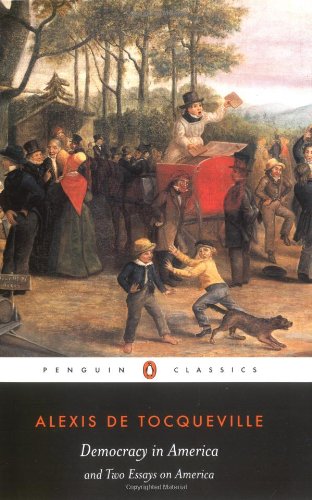
I guess Tocqueville was in on the bastardization of "democracy" that Baldy spouts out about long before the bastardization occured... which, according to baldy, happened in the "early 1900's."
I guess Tocqueville was in on the bastardization of "democracy" that Baldy spouts out about long before the bastardization occured... which, according to baldy, happened in the "early 1900's."
"The unmasking thing was all created by Devin Nunes"
- Richard Burr, (R-NC)
- Richard Burr, (R-NC)
Re: Texas OKs school textbook changes
It wasn't aimed at you necessarly. More like a collective "you".Skjellyfetti wrote:I don't think anything you posted disagrees with anything I said.Ibanez wrote:
Democracy is a political form of government. A Constitutional Republic is a state where the head of state and other officials are representatives of the people. A Republic is a constitutionally limited government of the representative type, created by a written Constitution. I know where you are confused. We are a Constitutional Republic with in terms of a Representative Democracy which is the principle of elected individuals representing the people. To get real technical, we are a Federal Constitutional Republic.
And I quote:
I pledge allegiance to the flag of the United States of America, and to the republic for which it stands, one nation under God, indivisible, with liberty and justice for all.
Source: An Introduction to the American Legal System
Turns out I might be a little gay. 89Hen 11/7/17
Re: Texas OKs school textbook changes
Exactly. That's why I never uttered or typed the word "Christian" in any of my responses.OSBF wrote:Baldy wrote: "And let us with caution indulge the supposition that morality can be maintained without religion. Whatever may be conceded to the influence of refined education on minds of peculiar structure, reason and experience both forbid us to expect that national morality can prevail in exclusion of religious principle.
--George Washington farewell address 1796"
"Christian" and "religious" as used in the 2 sources above are NOT synonyms. There are many ways to practice a religion, christianity being one.
Your point?
Re: Texas OKs school textbook changes
Skjellyfetti wrote:Best book ever written on our system of government:
I guess Tocqueville was in on the bastardization of "democracy" that Baldy spouts out about long before the bastardization occured... which, according to baldy, happened in the "early 1900's."
Um, it is the title of a book. Big Woo...
Call it what you want, but one of de Tocqueville's "worries" for America at the time he wrote the book was the "Tyranny of the Majority", which is horribly prevalent in a Democracy. That is specifically why the founders DID NOT establish a Democracy, but opted for a Constitutional Republic.
Oh and BTW, you do know that several of de Tocqueville's observations were incorrect, don't you?
Anyway, I will leave you with several quotes from out founding fathers and their views of "democracy".
"We are a Republican Government. Real liberty is never found in despotism or in the extremes of Democracy... It has been observed that a pure democracy if it were practicable would be the most perfect government. Experience has proved that no position is more false than this. The ancient democracies in which the people themselves deliberated never possessed one good feature of government. Their very character was tyranny; their figure deformity."
~ Alexander Hamilton, Secretary of the Treasury to George Washington, author of the Federalist Papers
"Democracy never lasts long. It soon wastes, exhausts, and murders itself. There never was a democracy yet that did not commit suicide."
~ John Adams, 2nd President of the United States
"A democracy is nothing more than mob rule, where fifty-one percent of the people may take away the rights of the other forty-nine."
~ Thomas Jefferson, 3rd President of the United States
"Democracies have ever been spectacles of turbulence and contention; have ever been found incompatible with personal security or the rights of property; and have in general been as short in their lives as they have been violent in their death.
~ James Madison, 4th President of the United States, Father of the Constitution
"The experience of all former ages had shown that of all human governments, democracy was the most unstable, fluctuating and short-lived."
~ John Quincy Adams, 6th President of the United States
"Democracy is two wolves and a lamb voting on what to have for dinner. Liberty is a well-armed lamb contesting the vote!
~ Benjamin Franklin
"Between a balanced republic and a democracy, the difference is like that between order and chaos."
~ John Marshall, Chief Justice of the Supreme Court, 1801-1835
-
OSBF
- Level2
- Posts: 1755
- Joined: Mon Jul 27, 2009 12:07 pm
- I am a fan of: The Illinois State Univer
- A.K.A.: old school bird fan
- Location: Normal, IL
Re: Texas OKs school textbook changes
Which is why you were attempting to argue we were a "christian" nation?????Baldy wrote:Exactly. That's why I never uttered or typed the word "Christian" in any of my responses.OSBF wrote:
"Christian" and "religious" as used in the 2 sources above are NOT synonyms. There are many ways to practice a religion, christianity being one.
Your point?

"It's hard to kiss the lips at night that chew on your ass all day."
-
Skjellyfetti
- Anal
- Posts: 14711
- Joined: Tue Oct 07, 2008 9:56 pm
- I am a fan of: Appalachian
Re: Texas OKs school textbook changes
Some of those quotes are talking about direct democracy or "pure democracy" which Hamilton calls it in the quotation you gave, which I would agree with you that we do not have... some of those quotes are talking about the system of government that we DO HAVE... which is a REPRESENTATIVE DEMOCRACY and ALSO a CONSTITUTIONAL REPUBLIC. And, you're right, Tocqueville's book isn't a praise of our system of government... it's also a critique... and the critique you provided from Tocquevlle and the founders are good and valid ones. I'm not arguing against them. I'm also not arguing that our government isn't a republic.
"The unmasking thing was all created by Devin Nunes"
- Richard Burr, (R-NC)
- Richard Burr, (R-NC)
-
green&gold75
- Supporter
- Posts: 435
- Joined: Sun Nov 29, 2009 6:00 am
- I am a fan of: WILLIAM & MARY
Re: Texas OKs school textbook changes
By lobbyists.Ibanez wrote:Democracy is a political form of government. A Constitutional Republic is a state where the head of state and other officials are representatives of the people. A Republic is a constitutionally limited government of the representative type, created by a written Constitution. I know where you are confused. We are a Constitutional Republic with in terms of a Representative Democracy which is the principle of elected individuals representing the people. To get real technical, we are a Federal Constitutional Republic.Skjellyfetti wrote:
Ugh. I feel like we've had this discussion plenty of times... but, I couldn't resist. IT'S BOTH A DEMOCRACY AND A REPUBLIC. I know it completely blows your mind that the two aren't mutually exclusive... but, it's true.
And I quote:
I pledge allegiance to the flag of the United States of America, and to the republic for which it stands, one nation under God, indivisible, with liberty and justice for all.
Source: An Introduction to the American Legal SystemThe United States relies on representative democracy, but its system of government is much more complex than that. It is not a simple representative democracy, but a constitutional republic in which majority rule is tempered
Re: Texas OKs school textbook changes
Jeezus Christ, could you be any more dense?OSBF wrote:Which is why you were attempting to argue we were a "christian" nation?????Baldy wrote:
Exactly. That's why I never uttered or typed the word "Christian" in any of my responses.
Your point?
Quit trying to put words in someone's mouth. I said that the founding fathers were very very religious, period.
What part of that do you NOT understand?

-
houndawg
- Level5

- Posts: 25103
- Joined: Tue Oct 14, 2008 1:14 pm
- I am a fan of: SIU
- A.K.A.: houndawg
- Location: Egypt
Re: Texas OKs school textbook changes
youngterrier wrote:uuuummmmm.......call me crazy but I don't think Washington said that but rather it was just the text in the treaty but I don't know for surekalm wrote:"As the Government of the United States of America is not, in any sense, founded on the Christian religion; as it has in itself no character of enmity against the laws, religion, or tranquillity, of Musselmen; and as the said States never have entered into any war or act of hostility against any Mehomitan nation, it is declared by the parties that no pretext arising from religious opinions shall ever produce an interruption of the harmony existing between the two countries."
- George Washington in the Treaty of Tripoli
Don't know if GW wrote the treaty text or not, but it was ratified by Congress (1790) making it the law of the land.
You matter. Unless you multiply yourself by c squared. Then you energy.
"I really love America. I just don't know how to get there anymore."John Prine
"I really love America. I just don't know how to get there anymore."John Prine


-
Skjellyfetti
- Anal
- Posts: 14711
- Joined: Tue Oct 07, 2008 9:56 pm
- I am a fan of: Appalachian
Re: Texas OKs school textbook changes
It was John Adams in 1796... and he couldn't have given a more ringing endorsement when he signed it:
Now be it known, That I John Adams, President of the United States of America, having seen and considered the said Treaty do, by and with the advice and consent of the Senate, accept, ratify, and confirm the same, and every clause and article thereof. And to the End that the said Treaty may be observed, and performed with good Faith on the part of the United States, I have ordered the premises to be made public; And I do hereby enjoin and require all persons bearing office civil or military within the United States, and all other citizens or inhabitants thereof, faithfully to observe and fulfill the said Treaty and every clause and article thereof.
"The unmasking thing was all created by Devin Nunes"
- Richard Burr, (R-NC)
- Richard Burr, (R-NC)
-
youngterrier
- Level3

- Posts: 2709
- Joined: Tue Jan 19, 2010 3:23 pm
- I am a fan of: the option
- A.K.A.: Boss the Terrier
- Location: a computer (duh)
Re: Texas OKs school textbook changes
I'm not disputing it at all, but I don't think Washington used those words exactly (but I'll admit I don't have facts to back that up, but I heard that somewhere)houndawg wrote:youngterrier wrote: uuuummmmm.......call me crazy but I don't think Washington said that but rather it was just the text in the treaty but I don't know for sure
Don't know if GW wrote the treaty text or not, but it was ratified by Congress (1790) making it the law of the land.
It was passed during the first Adams Administration
-
houndawg
- Level5
- Posts: 25103
- Joined: Tue Oct 14, 2008 1:14 pm
- I am a fan of: SIU
- A.K.A.: houndawg
- Location: Egypt
Re: Texas OKs school textbook changes
Aha! Now I understand. SCOTUS is just "tempering" majority rule by giving corporations the official OK to buy whatever legislation they want.green&gold75 wrote:By lobbyists.Ibanez wrote:
Democracy is a political form of government. A Constitutional Republic is a state where the head of state and other officials are representatives of the people. A Republic is a constitutionally limited government of the representative type, created by a written Constitution. I know where you are confused. We are a Constitutional Republic with in terms of a Representative Democracy which is the principle of elected individuals representing the people. To get real technical, we are a Federal Constitutional Republic.
And I quote:
I pledge allegiance to the flag of the United States of America, and to the republic for which it stands, one nation under God, indivisible, with liberty and justice for all.
Source: An Introduction to the American Legal System
You matter. Unless you multiply yourself by c squared. Then you energy.
"I really love America. I just don't know how to get there anymore."John Prine
"I really love America. I just don't know how to get there anymore."John Prine
Re: Texas OKs school textbook changes
Big labor has been doing it for years.houndawg wrote:Aha! Now I understand. SCOTUS is just "tempering" majority rule by giving corporations the official OK to buy whatever legislation they want.green&gold75 wrote: By lobbyists.

-
houndawg
- Level5
- Posts: 25103
- Joined: Tue Oct 14, 2008 1:14 pm
- I am a fan of: SIU
- A.K.A.: houndawg
- Location: Egypt
Re: Texas OKs school textbook changes
Yeah, you can tell by the increase in union membership.Baldy wrote:Big labor has been doing it for years.houndawg wrote:
Aha! Now I understand. SCOTUS is just "tempering" majority rule by giving corporations the official OK to buy whatever legislation they want.
You matter. Unless you multiply yourself by c squared. Then you energy.
"I really love America. I just don't know how to get there anymore."John Prine
"I really love America. I just don't know how to get there anymore."John Prine