
http://money.cnn.com/2010/11/08/news/ec ... /index.htm" onclick="window.open(this.href);return false;
Americans have paid off nearly $1 trillion in debt over the past two years, although the pace of repayment has slowed, according to a regional Federal Reserve report released Monday.
Total consumer debt was $11.6 trillion as of Sept. 30; down 7.4%, or $922 billion, from the peak reached in the third quarter of 2008, according to the Federal Reserve Bank of New York. Consumer indebtedness fell another 0.3% in the third quarter, after a 3.3% decline in the prior quarter.
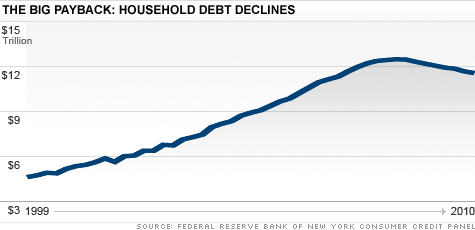
So, being a numbers guy, this starts me thinking: Have they backed out the impact of chargeoffs/foreclosures/repossessions from this figure, or is this ACTUAL paydown of current debt by virtuous Americans?
A little more searching reveals THIS:
http://blogs.wsj.com/economics/2010/09/ ... down-debt/" onclick="window.open(this.href);return false;
0.08% — The annual rate at which U.S. consumers have pared down their debts since mid-2008, not counting defaults.
U.S. consumers might not be quite as virtuous as they seem.
The sharp decline in U.S. household debt over the past couple years has conjured up images of people across the country tightening their belts in order to pay down their mortgages and credit-card balances. A closer look, though, suggests a different picture: Some are defaulting, while the rest aren’t making much of a dent in their debts at all.

Alas, it's just as I feared:
So, the Fed says $1 TRILLION has been paid off, but all but $22 BILLION of that is through CHARGEOFFS. Is this a blatant attempt by the Fed to spin statistics in their favor? Are they that smart? Or that retarded?There are two ways, though, that the debts can decline: People can pay off existing loans, or they can renege on the loans, forcing the lender to charge them off. As it happens, the latter accounted for almost all the decline. Our own analysis of data from the Fed and the Federal Deposit Insurance Corp. suggests that over the two years ending June 2010, banks and other lenders charged off a total of about $588 billion in mortgage and consumer loans.
That means consumers managed to shave off only $22 billion in debt through the kind of belt-tightening we typically envision. In other words, in the absence of defaults, they would have achieved an annualized decline of only 0.08%.
Inquiring minds want to know.